
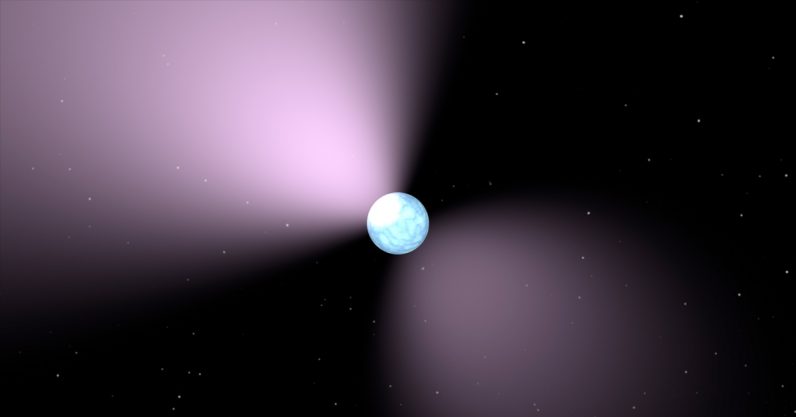
On May 22, 2020, light from a titanic explosion deep in space reached Earth. The energy seen by astronomers told of the collision of a pair of neutron stars, creating a kilonova explosion. This event, releasing more energy in a half-second than our Sun will produce in 10 billion years, left a rare object behind in the debris. When astronomers examined the eruption, they found evidence of a magnetar — an ultradense neutron star, roughly the size of a city, housing a powerful magnetic field. I’m still going to need your insurance information… The discovery — the first time a…
This story continues at The Next Web